
- Heat pumps
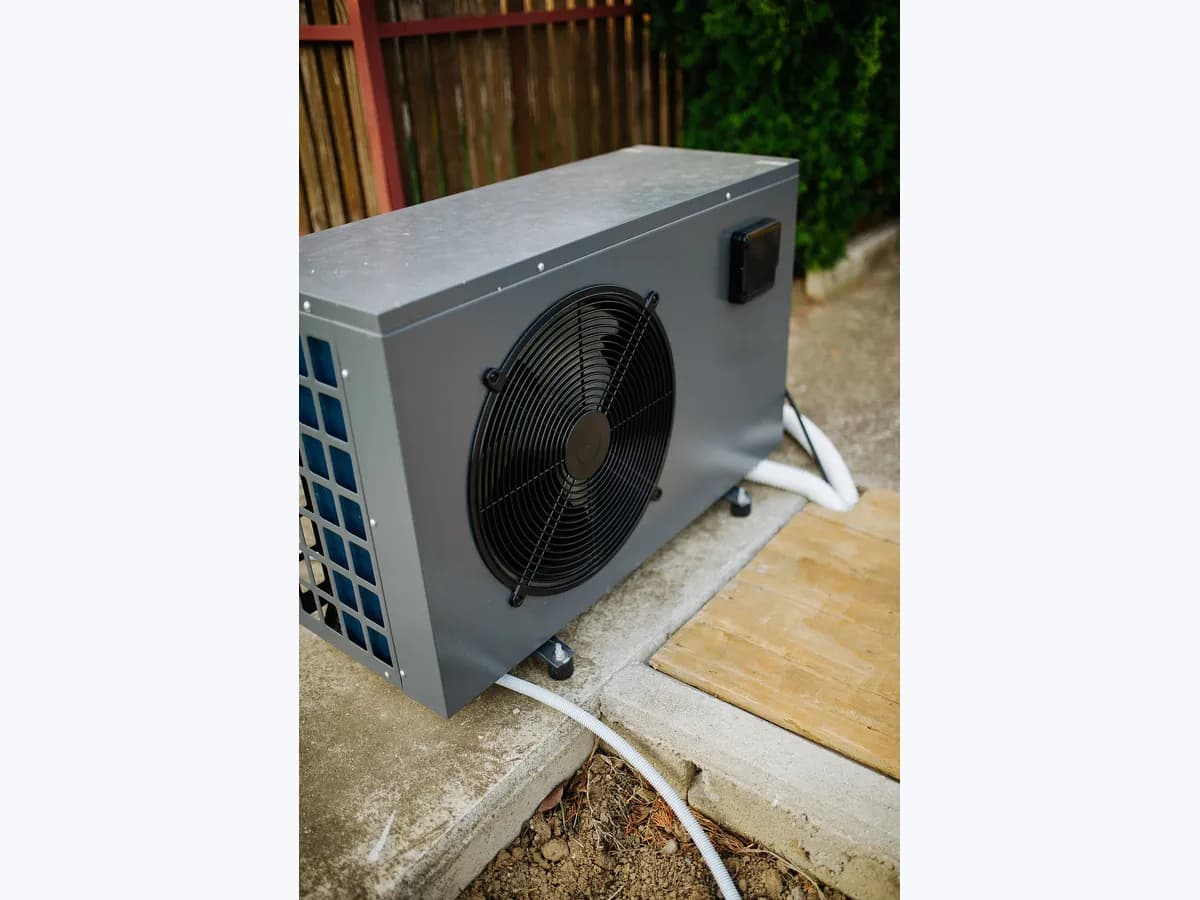
- Pool heat pump
HP
Hayward HP on pool heat pump: high refrigerant pressure
Risk level
Medium
Proceed carefully and stop if the check is unclear.
Urgency
Medium
Quick answer
HP (or HI on round HeatPro units) means the refrigerant high pressure switch has opened. The most common cause, according to Hayward, is low water flow: check the filter pump, filter and bypass.
Safety first
Stop and check this first
- If HP returns after fixing the flow, do not keep resetting it: call a technician before using it further.
- Do not open the unit or touch the refrigerant circuit: R-410A at high pressure and 240 V. Hayward reserves these tests for qualified service personnel.
Safe checks you can perform
- When HP appears
- Bypass closed and valves open
- Filter pump and filter
- Spa mode at high temperature
- Pressures and high pressure switch
Leave these tasks to a qualified professional
- Do not attempt this professional task: High pressure switch and wiring test
- Do not attempt this professional task: Pressure readings with the unit running
- Do not attempt this professional task: Refrigerant charge check
What a technician must be able to justify
Technician visit
These are the steps they must carry out and show you. Tick them as they work: if steps are skipped, do not accept a part swap.
These are not instructions for opening or handling the equipment yourself. They are the checks that should support a technical conclusion.
High pressure switch and wiring test
What they doWith the unit off, the technician checks continuity of the high pressure switch, which should be closed, and the wires to the board.
They must show youthe switch continuity reading and the state of the wires.
In writingwhether the switch or board was replaced, the reference and the reason.
Pressure readings with the unit running
What they doThe technician fits gauges and watches high and low side during start-up to rule a failed TXV in or out.
They must show youthe high and low readings against what Hayward describes, and the water flow checked first.
In writingthe pressures measured, the diagnosis and any part replaced with its reference.
Refrigerant charge check
What they doIf there was earlier service and overcharge is suspected, the technician recovers all refrigerant, pulls a 500 micron vacuum and charges to the data plate.
They must show youthe data plate with the factory charge and the record of the charge made.
In writingthe amount recovered and charged, the vacuum reached and their fluorinated gas certificate.
Before accepting a part or repair
Nothing has been shown yet. Do not accept a part swap based on the code alone.
Follow these steps
Note: Follow the documented order. An error code identifies the affected system, but it does not prove by itself which part has failed.
When HP appears
- Who:
- you, no tools.
- How:
- note whether HP shows after running a while, a few seconds after start-up, or without the unit starting at all.
- Result that matters:
- the exact moment, because Hayward separates causes by when it appears.
- If it shows after running a while:
- usually a flow problem; continue with the water checks.
- If it shows after a few seconds or without starting:
- points to TXV, switch or board; call a technician after checking flow.
- Evidence to keep:
- a note with time, mode (pool or spa) and water temperature.
Evidence: Hayward/Summit Heat Pump Troubleshooting Guide (TSG-HTPMPa)
Bypass closed and valves open
- Who:
- you, no tools.
- How:
- check that the heat pump bypass is closed and its inlet and outlet valves are open; Hayward names an open bypass as a likely culprit.
- Result that matters:
- water passing through the heat exchanger.
- If the bypass was open and HP does not return once closed:
- it was the bypass.
- If the valves were right:
- go to pump and filter.
- Evidence to keep:
- a photo of the valve positions.
Evidence: Hayward/Summit Heat Pump Troubleshooting Guide (TSG-HTPMPa)
Filter pump and filter
- Who:
- you.
- How:
- confirm the filter pump is running and clean or backwash the filter following its instructions.
- Result that matters:
- restoring the minimum flow Hayward requires.
- If after cleaning, the unit runs without HP:
- it was low flow.
- If HP returns with a clean filter and closed bypass:
- call a technician.
- Evidence to keep:
- the cleaning date and the filter gauge reading, if it has one.
Evidence: Hayward/Summit Heat Pump Troubleshooting Guide (TSG-HTPMPa)
Spa mode at high temperature
- Who:
- you.
- How:
- if HP only appears when heating the spa close to 100 °F, note it; Hayward explains higher water temperatures may need more flow.
- Result that matters:
- knowing whether the fault depends on spa mode.
- If it only happens with a hot spa:
- tell the installer to review the flow on that circuit.
- If it also happens in pool mode:
- spa flow is not the explanation.
- Evidence to keep:
- a note of the mode and temperature when HP appeared.
Evidence: Hayward/Summit Heat Pump Troubleshooting Guide (TSG-HTPMPa)
Pressures and high pressure switch
- Who:
- a refrigeration technician certified for fluorinated gases.
- How:
- with gauges, watch high and low side while the unit runs; with the unit off, check continuity of the high pressure switch.
- Result that matters:
- telling flow, TXV, overcharge or switch apart.
- If high side rises fast towards 590 PSI and low side drops:
- Hayward points to the TXV.
- If HP without running and the switch open:
- the switch is replaced; if closed, wires and board are checked.
- Evidence to keep:
- pressure and continuity readings.
The R-410A refrigerant circuit runs at high pressure and the unit is on 240 V. Only a technician certified for fluorinated gases.
Evidence: Hayward/Summit Heat Pump Troubleshooting Guide (TSG-HTPMPa)
Still not solved
If the error persists, stop here. See what the technician must do and show you.
Where this code applies
A code is meaningful only inside the right product and version context.
Primary scope
- System
- Heat pumps
- Brand
- Hayward
- Product type
- Pool heat pump
Known code variants
- alta presión Hayward
- error HP bomba de calor piscina Hayward
- Hayward HeatPro HI
- Hayward HeatPro HI error
- Hayward HP bomba de calor
- Hayward HP heat pump
- Hayward pool heat pump high pressure
- Hayward Summit HP
- HI
- HP
What it means
Hayward explains that HP (square display) or HI (round display) indicates the high pressure switch is open: it opens above 590 PSI and resets automatically at 440 PSI. For Hayward the most common cause is restricted water flow, especially an open bypass that pressurizes the heat exchanger without letting water through. It can also come from a failed expansion valve (TXV), refrigerant overcharge after earlier service, or a faulty switch or wire. HP does not prove a part is broken: water flow almost always comes first.
Warnings and stop conditions
- Mediumeditorial warning
If HP returns after fixing the flow, do not keep resetting it: call a technician before using it further.
Evidence: Hayward/Summit Heat Pump Troubleshooting Guide (TSG-HTPMPa)
- Highsource verified
Do not open the unit or touch the refrigerant circuit: R-410A at high pressure and 240 V. Hayward reserves these tests for qualified service personnel.
Evidence: Hayward/Summit Heat Pump Troubleshooting Guide (TSG-HTPMPa)
Symptoms and causes
Probable causes · in order
- Restricted water flowCommon
Open bypass, dirty filter or low pump flow; the unit runs for a while then stops on HP. Hayward requires a minimum of 30 gpm.
Evidence: Hayward/Summit Heat Pump Troubleshooting Guide (TSG-HTPMPa)
- Hot spa with low flowPossible
When heating a spa to about 100 °F flow may not be enough; Hayward says at least 40 gpm may be needed.
Evidence: Hayward/Summit Heat Pump Troubleshooting Guide (TSG-HTPMPa)
- Failed expansion valve (TXV)Possible
HP shows a few seconds after start-up; on gauges, high side rises fast towards 590 PSI while low side drops. Only a refrigeration technician can see this.
Evidence: Hayward/Summit Heat Pump Troubleshooting Guide (TSG-HTPMPa)
- Refrigerant overcharge after a repairLess common
Hayward calls it unlikely: only if someone overcharged during earlier service. Fixed by recovering the refrigerant and charging to the data plate.
Evidence: Hayward/Summit Heat Pump Troubleshooting Guide (TSG-HTPMPa)
- High pressure switch, wire or boardPossible
If HP shows without the unit ever running, it is not real pressure: the switch, its wires or the board give a false signal.
Evidence: Hayward/Summit Heat Pump Troubleshooting Guide (TSG-HTPMPa)
Virtual technician
Does HP still appear after these checks?
Answer a few questions to narrow down the likely cause and the safest next action. Guidance only - it never replaces a professional.
Sources and technical references
- 1
Hayward/Summit Heat Pump Troubleshooting Guide (TSG-HTPMPa)
Hayward · 2018 · official_doc
Was this entry useful?