
- Heat pumps
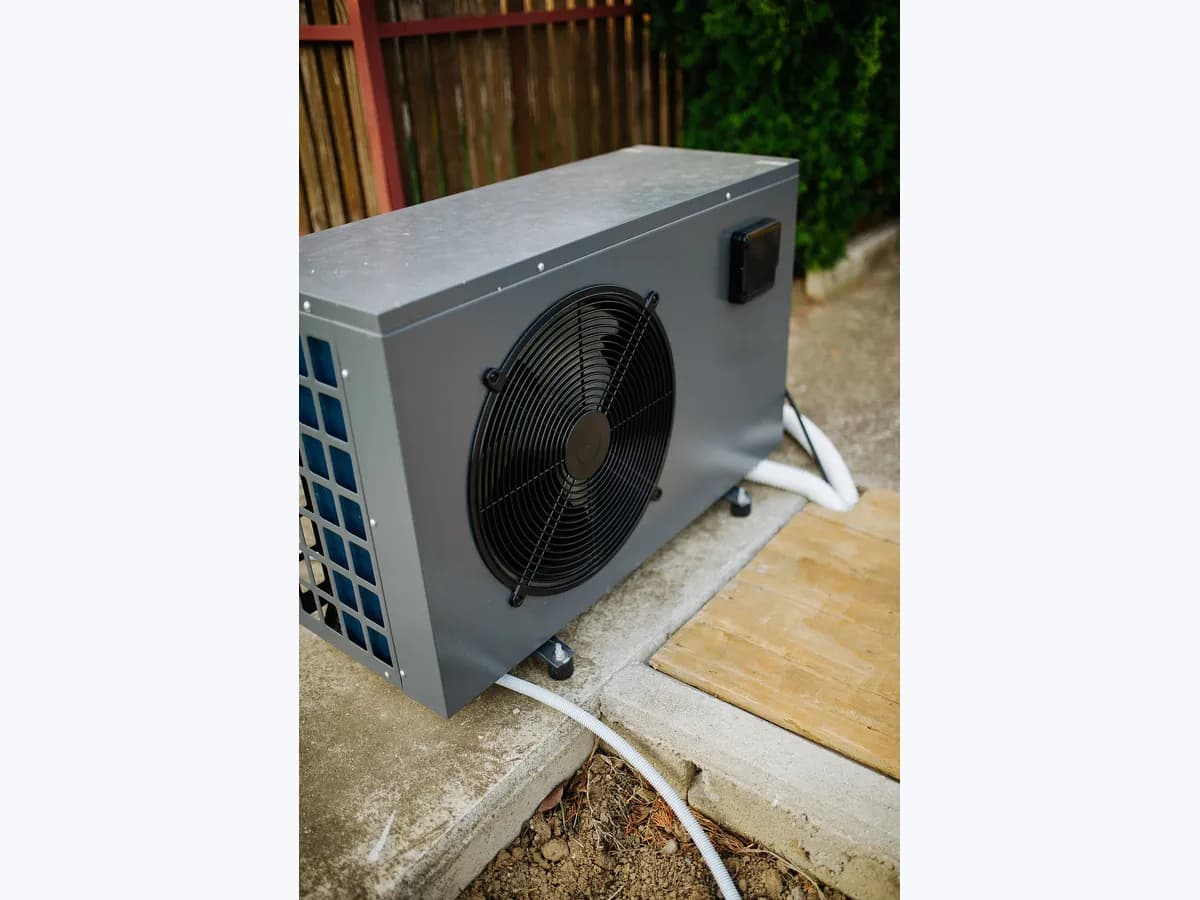
- Pool heat pump
LP
Hayward LP on pool heat pump: low refrigerant pressure
Risk level
Medium
Proceed carefully and stop if the check is unclear.
Urgency
Medium
Quick answer
LP means the refrigerant low pressure switch has opened. If it is very cold outside, wait for the temperature to rise; otherwise Hayward names a refrigerant leak as the most common cause: call a technician.
Safety first
Stop and check this first
- Adding refrigerant without finding and repairing the leak does not fix LP. Hayward asks for the leak to be repaired, the system evacuated and charged to the data plate.
- The R-410A circuit and the 240 V electrics are for qualified technicians only; in the EU, certified for fluorinated gases.
Safe checks you can perform
- Outdoor temperature
- When LP appears
- Fan at start-up
- Low side pressure at the access port
Leave these tasks to a qualified professional
- Do not attempt this professional task: Leak search and repair
- Do not attempt this professional task: Fan and capacitor check
- Do not attempt this professional task: Low pressure switch and wiring test
What a technician must be able to justify
Technician visit
These are the steps they must carry out and show you. Tick them as they work: if steps are skipped, do not accept a part swap.
These are not instructions for opening or handling the equipment yourself. They are the checks that should support a technical conclusion.
Leak search and repair
What they doThe technician looks for the leak with an electronic detector, with dry nitrogen and a liquid leak detector, or with UV dye; repairs it, pulls a vacuum of at least 500 microns and charges to the data plate.
They must show youthe leak point found, the vacuum reading and the pressure after charging.
In writingwhere the leak was, how it was repaired, the charge in kilograms and their fluorinated gas certificate.
Fan and capacitor check
What they doIf LP is intermittent, the technician checks the fan motor and its capacitor and replaces the faulty one.
They must show youthe capacitor reading against its rated value and the fan turning after the repair.
In writingthe part replaced, its reference and the test result.
Low pressure switch and wiring test
What they doWith pressure above 120 PSI, the technician checks continuity of the low pressure switch, which should be closed, and the wires to the board.
They must show youthe measured pressure and the switch continuity reading.
In writingwhether the switch or board was replaced, the reference and the reason.
Before accepting a part or repair
Nothing has been shown yet. Do not accept a part swap based on the code alone.
Follow these steps
Note: Follow the documented order. An error code identifies the affected system, but it does not prove by itself which part has failed.
Outdoor temperature
- Who:
- you, no tools.
- How:
- check the outdoor air temperature when LP appears; Hayward says sustained cold below 21 °F causes LP and you should wait for the air to warm up.
- Result that matters:
- knowing whether LP matches very cold weather.
- If it is very cold and LP clears by itself as it warms:
- it was the cold, not a fault.
- If the weather is mild and LP stays:
- go on to watching the start-up.
- Evidence to keep:
- a note of the outdoor temperature and the time.
Evidence: Hayward/Summit Heat Pump Troubleshooting Guide (TSG-HTPMPa)
When LP appears
- Who:
- you, no tools.
- How:
- note whether the unit runs a few seconds and then shows LP, or never starts.
- Result that matters:
- the exact moment, because Hayward's flow chart starts with this question.
- If it runs a few seconds then shows LP:
- points to the fan or low refrigerant.
- If it does not start and shows LP in mild weather:
- points to the switch, wires or board.
- Evidence to keep:
- a note or short video of the start-up.
Evidence: Hayward/Summit Heat Pump Troubleshooting Guide (TSG-HTPMPa)
Fan at start-up
- Who:
- you, from outside and without touching the unit.
- How:
- when the heat pump starts, look through the top grille to see whether the fan turns; do not put hands or objects inside.
- Result that matters:
- whether the fan starts.
- If the fan does not turn:
- tell the technician; Hayward asks for the motor and capacitor to be checked.
- If the fan turns and LP stays:
- the technician must measure pressures.
- Evidence to keep:
- a short video of the start-up.
Evidence: Hayward/Summit Heat Pump Troubleshooting Guide (TSG-HTPMPa)
Low side pressure at the access port
- Who:
- a refrigeration technician certified for fluorinated gases.
- How:
- fit gauges and check whether pressure is above 120 PSI when the unit does not start and whether it drops below 80 PSI while running.
- Result that matters:
- telling low refrigerant, fan or switch apart.
- If it drops below 80 PSI:
- Hayward points to low refrigerant and a leak check.
- If it is above 120 PSI and LP stays:
- the switch and its wires are checked for continuity.
- Evidence to keep:
- the pressure readings written down.
R-410A refrigerant circuit under pressure and unit on 240 V. Only a technician certified for fluorinated gases.
Evidence: Hayward/Summit Heat Pump Troubleshooting Guide (TSG-HTPMPa)
Still not solved
If the error persists, stop here. See what the technician must do and show you.
Where this code applies
A code is meaningful only inside the right product and version context.
Primary scope
- System
- Heat pumps
- Brand
- Hayward
- Product type
- Pool heat pump
Known code variants
- baja presión Hayward
- error LP bomba de calor piscina Hayward
- Hayward HeatPro LP
- Hayward HeatPro LP error
- Hayward LP bomba de calor
- Hayward LP heat pump
- Hayward pool heat pump low pressure
- Hayward Summit LP
- LP
What it means
Hayward explains that LP indicates the low pressure switch is open: it opens when refrigerant pressure drops below 80 PSI and resets automatically at 120 PSI. Sustained outdoor temperatures below 21 °F also cause it, and the switch closes on its own once the air rises above 40 °F. The most common cause is refrigerant loss from a leak. An intermittent LP can come from the fan motor or its capacitor, and also from the switch, its wires or the board. LP alone does not confirm a leak: the technician must measure pressure before adding any refrigerant.
Warnings and stop conditions
- Higheditorial warning
Adding refrigerant without finding and repairing the leak does not fix LP. Hayward asks for the leak to be repaired, the system evacuated and charged to the data plate.
Evidence: Hayward/Summit Heat Pump Troubleshooting Guide (TSG-HTPMPa)
- Higheditorial warning
The R-410A circuit and the 240 V electrics are for qualified technicians only; in the EU, certified for fluorinated gases.
Evidence: Hayward/Summit Heat Pump Troubleshooting Guide (TSG-HTPMPa)
Symptoms and causes
Probable causes · in order
- Cold outdoor airPossible
With air held below 21 °F the unit does not start and shows LP; it clears on its own once the air rises above 40 °F.
Evidence: Hayward/Summit Heat Pump Troubleshooting Guide (TSG-HTPMPa)
- Refrigerant leakCommon
The most common cause according to Hayward: the unit runs a few seconds then shows LP, and pressure at the access port is below 80 PSI.
Evidence: Hayward/Summit Heat Pump Troubleshooting Guide (TSG-HTPMPa)
- Fan motor or capacitorPossible
Gives an intermittent LP: if the fan does not turn when the unit starts, low side pressure drops even with enough refrigerant.
Evidence: Hayward/Summit Heat Pump Troubleshooting Guide (TSG-HTPMPa)
- Low pressure switch, wires or boardPossible
Pressure is above 120 PSI but the switch is open, a wire is broken or the board does not read the signal.
Evidence: Hayward/Summit Heat Pump Troubleshooting Guide (TSG-HTPMPa)
Virtual technician
Does LP still appear after these checks?
Answer a few questions to narrow down the likely cause and the safest next action. Guidance only - it never replaces a professional.
Sources and technical references
- 1
Hayward/Summit Heat Pump Troubleshooting Guide (TSG-HTPMPa)
Hayward · 2018 · official_doc
Was this entry useful?