
- Heat pumps
- Air-to-water heat pump
F15
Panasonic F15 on an Aquarea heat pump: wrong outdoor fan speed
Risk level
Medium
Proceed carefully and stop if the check is unclear.
Urgency
Medium
Quick answer
On an Aquarea, F15 means the outdoor unit fan is not turning at the correct speed. From outside, check whether leaves, sticks or snow are holding it back; switch off the power before removing anything, as the fan can start by itself.
Safety first
Stop and check this first
- Always switch off the power before removing anything from the fan: Panasonic warns it can start without warning and the blades can cause injury.
- Do not touch the aluminium fins of the outdoor unit while clearing it: Panasonic warns they are sharp.
Safe checks you can perform
- Inspect the outdoor unit by eye
- Switch off the power before removing the obstruction
- Keep the area around the outdoor unit clear
Leave these tasks to a qualified professional
- Do not attempt this professional task: Check of the outdoor fan motor
- Do not attempt this professional task: Diagnosis of the outdoor unit electronics
What a technician must be able to justify
Technician visit
These are the steps they must carry out and show you. Tick them as they work: if steps are skipped, do not accept a part swap.
These are not instructions for opening or handling the equipment yourself. They are the checks that should support a technical conclusion.
Check of the outdoor fan motor
What they doWith the power off, the installer checks the blades turn freely, inspects the fan motor and its connections and looks for ice or impact damage.
They must show youthe fan turning freely and the condition of its connections.
In writingwhat was found at the fan, any part replaced and why.
Diagnosis of the outdoor unit electronics
What they doIf the motor looks fine, the technician checks the speed control on the outdoor unit board following Panasonic's service manual.
They must show youthe error history and the measurements taken on the outdoor unit.
In writingthe diagnosis, the parts replaced and the final operating test.
Before accepting a part or repair
Nothing has been shown yet. Do not accept a part swap based on the code alone.
Follow these steps
Note: Follow the documented order. An error code identifies the affected system, but it does not prove by itself which part has failed.
Inspect the outdoor unit by eye
- Who:
- you, without touching anything.
- How:
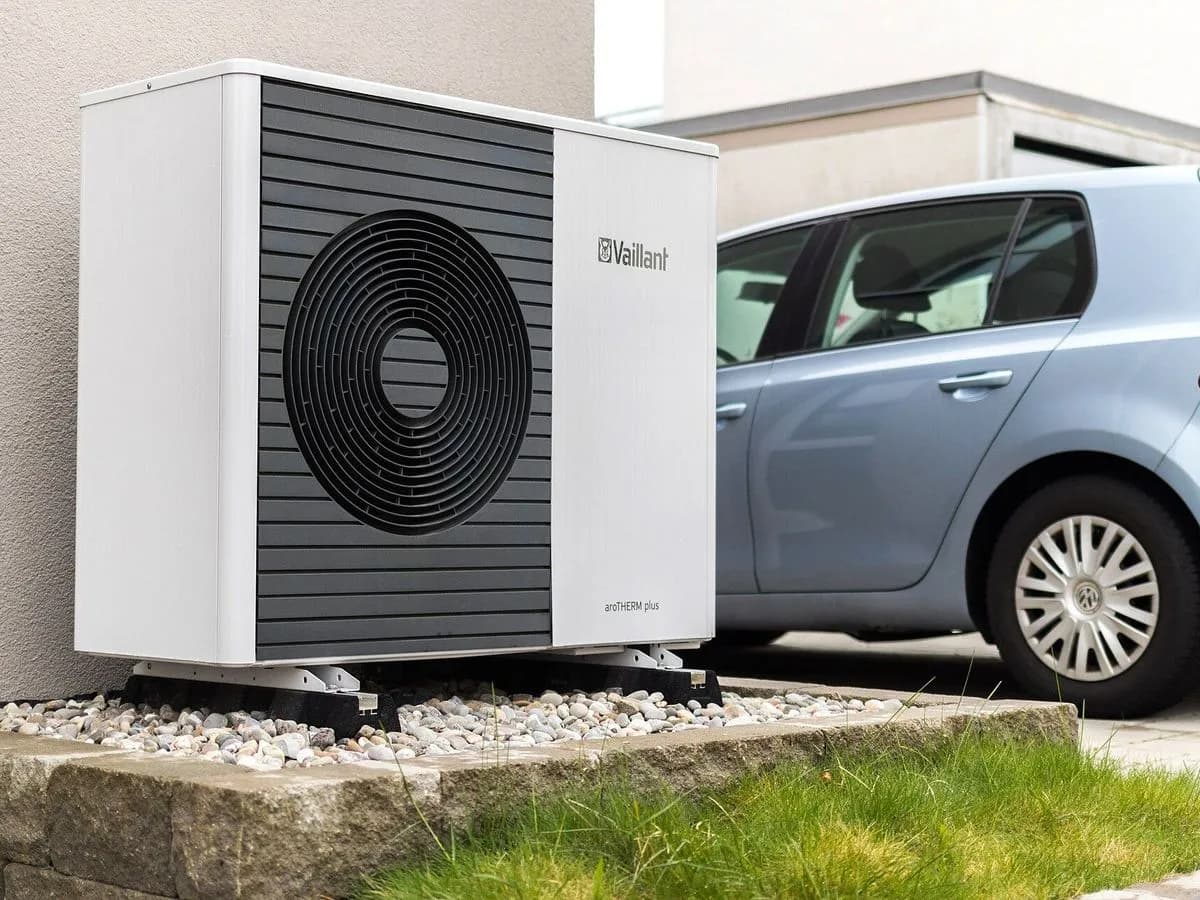
- go to the outdoor unit and look at the fan grille and the back where air is drawn in. Look for leaves, sticks, bags or built-up snow. Do not put fingers through the grille: there are rotating parts.
- Result that matters:
- knowing whether something visible is slowing the fan.
- If you see something stuck or snow build-up:
- switch off the power before removing it.
- If the unit is clear:
- write down F15 and book your installer.
- Evidence to keep:
- photo of the outdoor unit as you found it.
Evidence: Panasonic Aquarea user guide for Bi-Bloc, Monobloc and All in One, C, D and E series
Switch off the power before removing the obstruction
- Who:
- you.
- How:
- turn the system off and remove the power to the outdoor unit at its isolator or the consumer unit. Panasonic warns that the fan can start without warning. Then clear leaves, sticks or snow from the outside of the unit without opening panels.
- Result that matters:
- a free fan and a unit with nothing blocking the air inlet or outlet.
- If you have cleared the obstruction:
- restore the power and check whether F15 clears.
- If the object is inside the casing and cannot be reached from outside:
- do not dismantle anything and call the installer.
- Evidence to keep:
- photo of the unit once cleared.
Evidence: Panasonic Aquarea user guide for Bi-Bloc, Monobloc and All in One, C, D and E series
Keep the area around the outdoor unit clear
- Who:
- you, as a regular check.
- How:
- Panasonic's guide asks that the outdoor unit never has obstacles covering it, especially leaves in autumn and snow in winter. Cut back nearby plants and do not place objects on top of it or underneath it.
- Result that matters:
- less chance of the fan being slowed again.
- If the unit sits where leaves or snow often pile up:
- discuss it with the installer.
- If the surroundings are clear and F15 returns:
- the cause is internal.
- Evidence to keep:
- photos of the area around the unit.
Evidence: Panasonic Aquarea user guide for Bi-Bloc, Monobloc and All in One, C, D and E series
Still not solved
If the error persists, stop here. See what the technician must do and show you.
Where this code applies
A code is meaningful only inside the right product and version context.
Primary scope
- System
- Heat pumps
- Brand
- Panasonic
- Product type
- Air-to-water heat pump
Known code variants
- anomalía F15 Miele
- anomalie F15 Miele
- Aquarea F15
- Aquarea nieve ventilador F15
- Aquarea outdoor fan F15
- Aquarea snow blocked fan F15
- Aquarea ventilador exterior F15
- bomba de calor Panasonic F15 ventilador
- code erreur F15 lave-vaisselle Miele
- error F15 aerotermia Panasonic
- error F15 lavavajillas Miele
- errore F15 lavastoviglie Miele
- F 15
- Fehlercode F15 Miele
- guasto F15 Miele
- lavadora Miele anomalía F15
- Miele dishwasher F15
- Miele F15
- Miele F15 agua caliente
- Miele F15 hot water inlet
- Miele fault F15
- Miele Geschirrspüler Fehler F15
- Miele lavadora F15
- Miele washer F15
- Miele washing machine fault F15
- Panasonic Aquarea F15
- Panasonic heat pump error F15
- Panasonic heat pump F15 fan speed
What it means
Panasonic's Aquarea user guide for the C, D and E series defines F15 as incorrect speed of the outdoor unit fan. It is one of the few codes where Panasonic gives the user an action: check there is no obstruction of the fan, such as leaves, sticks or snow, and switch off the power before removing it. If nothing is holding the fan back, the reason is inside the unit and an installer must look at it. The code is not enough to treat the motor or the board as faulty.
Warnings and stop conditions
- Highsource verified
Always switch off the power before removing anything from the fan: Panasonic warns it can start without warning and the blades can cause injury.
Evidence: Panasonic Aquarea user guide for Bi-Bloc, Monobloc and All in One, C, D and E series
- Mediumsource verified
Do not touch the aluminium fins of the outdoor unit while clearing it: Panasonic warns they are sharp.
Evidence: Panasonic Aquarea user guide for Bi-Bloc, Monobloc and All in One, C, D and E series
Symptoms and causes
Probable causes · in order
- Leaves, sticks or other objects in the fanCommon
Panasonic mentions leaves and sticks getting into the outdoor unit and rubbing on or blocking the blades, especially in autumn.
Evidence: Panasonic Aquarea user guide for Bi-Bloc, Monobloc and All in One, C, D and E series
- Snow or ice built up on the outdoor unitCommon
The guide names snow as a typical fan obstruction; a layer of snow slows the blades or covers the air outlet in winter.
Evidence: Panasonic Aquarea user guide for Bi-Bloc, Monobloc and All in One, C, D and E series
- Internal fault in the fan or its controlPossible
If the fan is free and F15 remains, the guide refers you to the installer; checking the motor and electronics is technical work.
Evidence: Panasonic Aquarea user guide for Bi-Bloc, Monobloc and All in One, C, D and E series
Virtual technician
Does F15 still appear after these checks?
Answer a few questions to narrow down the likely cause and the safest next action. Guidance only - it never replaces a professional.
Sources and technical references
- 1
Panasonic Aquarea user guide for Bi-Bloc, Monobloc and All in One, C, D and E series
Panasonic · 2014 · manual
Was this entry useful?