

- Boilers
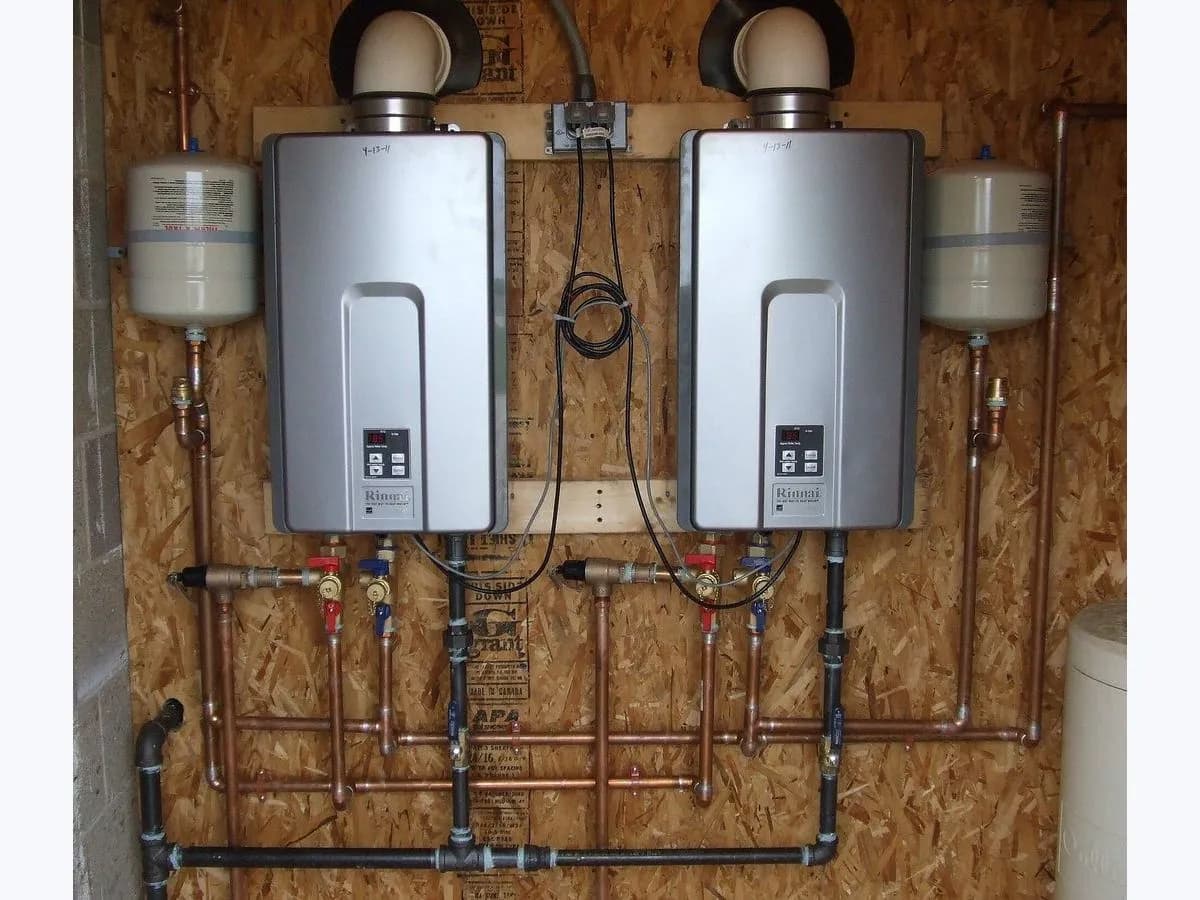
- Tankless gas water heater
14
Rinnai 14 on a tankless water heater: overheat safety tripped
Risk level
High
Professional inspection is recommended.
Urgency
High
Quick answer
The heater's overheat protection tripped, and Rinnai says code 14 should be taken seriously. Turn the heater off, close the manual gas valve to the appliance as Rinnai advises for overheating, and call a licensed professional.
Safety first
Stop and check this first
- Do not keep restarting the heater after code 14. Rinnai says the bi-metal switch will continue to trip if the root cause is not corrected.
- If you smell gas: do not try to light any appliance, do not touch any electrical switch and do not use any phone in the building. Call your gas supplier from a neighbor's phone and follow its instructions; if you cannot reach it, call the fire department.
Safe checks you can perform
- Turn the heater off and close its gas valve
- Space around the unit and the vent terminal
- Water hardness and last flushing
- Recent code history on the controller
Leave these tasks to a qualified professional
- Do not attempt this professional task: Check air flow, gas type and settings
- Do not attempt this professional task: Measure the overheat safety circuit
- Do not attempt this professional task: Inspect and flush the heat exchanger
What a technician must be able to justify
Technician visit
These are the steps they must carry out and show you. Tick them as they work: if steps are skipped, do not accept a part swap.
These are not instructions for opening or handling the equipment yourself. They are the checks that should support a technical conclusion.
Check air flow, gas type and settings
What they doThe professional checks clearances around the unit and terminal, gas type against the rating plate, the gas valve DIP switch or parameter, gas venturi or orifice, and high and low fire manifold pressure.
They must show yousettings found against the manual.
In writingwhat was changed.
Measure the overheat safety circuit
What they doWith power off, the professional inspects the overheat sensor harness and measures resistance of the safety circuit at the PC board.
They must show youthe measured value against the Technical Data Sheet.
In writingwhich device opened.
Inspect and flush the heat exchanger
What they doThe professional inspects the exchanger for cracks, discoloration and debris and flushes it. Replacing blown thermo-fuses requires removing the heat exchanger.
They must show youphotos of the exchanger.
In writingthe cause found and parts replaced.
Before accepting a part or repair
Nothing has been shown yet. Do not accept a part swap based on the code alone.
Follow these steps
Note: Follow the documented order. An error code identifies the affected system, but it does not prove by itself which part has failed.
Turn the heater off and close its gas valve
- Who:
- you.
- How:
- turn power off with the On/Off button, set the thermostat to the lowest setting and turn the manual gas valve on the side of the heater clockwise to full OFF. Rinnai says to turn off the manual gas control valve if overheating occurs.
- Result that matters:
- the heater is isolated until the visit.
- If you smell gas:
- stop and follow the gas warning on this page.
- If you do not:
- keep it off and call a licensed professional.
- Evidence to keep:
- time and code shown.
Evidence: Rinnai Value Series tankless water heater installation and operation manual
Space around the unit and the vent terminal
- Who:
- you.
- How:
- look, without touching the heater, for anything stored against it or blocking the vent terminal outside. Rinnai asks owners to keep the area clear of combustible materials.
- Result that matters:
- whether air flow around the unit or terminal is restricted.
- If items are stored against it:
- move them away and tell the technician.
- If the area is clear:
- the cause is more likely inside the unit or in its settings.
- Evidence to keep:
- photo of the area.
Evidence: Rinnai Value Series tankless water heater installation and operation manual
Water hardness and last flushing
- Who:
- you.
- How:
- check when the heat exchanger was last flushed and whether your water is hard. Rinnai links scale hot spots to code 14 and says hard water must be treated.
- Result that matters:
- whether scale is a plausible cause.
- If it was never flushed or the water is hard:
- ask the technician to check for scale; the flushing procedure is in the manual.
- If it was flushed recently:
- other branches are more likely.
- Evidence to keep:
- maintenance invoices.
Evidence: Rinnai Value Series tankless water heater installation and operation manual
Recent code history on the controller
- Who:
- you.
- How:
- on the MC-91-2 controller of Value Series models, press and hold On/Off for 2 seconds and, while holding it, press the up button. The last 9 codes flash one after another. Repeat the same keys to exit.
- Result that matters:
- whether 14 repeats and which other codes appear.
- If only 14 repeats:
- the problem is consistent and the technician starts from this code.
- If 14 appears with 10, 11 or 12:
- note every code, because they change the diagnosis.
- Evidence to keep:
- a photo or video of the code sequence with the date.
Evidence: Rinnai Value Series tankless water heater installation and operation manual
Still not solved
If the error persists, stop here. See what the technician must do and show you.
Where this code applies
A code is meaningful only inside the right product and version context.
Primary scope
- System
- Boilers
- Brand
- Rinnai
- Product type
- Tankless gas water heater
Known code variants
- 14
- Ariston Velis 14
- calentador Rinnai 14
- código 14 Rinnai
- Er 14
- error 14 Rinnai
- Rinnai 14
- Rinnai 14 overheat
- Rinnai code 14
- Rinnai code 14 thermal fuse
- Rinnai error 14
- Velis error 14
What it means
Rinnai defines code 14 as the thermal fuse or overheat sensor (ODS). Two devices can trip it: a bi-metal switch on the heat exchanger, which resets after cooling, and thermo-fuses around the heat exchanger, which are one-shot and must be replaced. Rinnai's causes include restricted air flow around the unit or vent terminal, wrong gas type or settings, low water flow in a circulating system, scale or debris in the heat exchanger and a damaged exchanger. The code does not say which device opened or why.
Warnings and stop conditions
- Higheditorial warning
Do not keep restarting the heater after code 14. Rinnai says the bi-metal switch will continue to trip if the root cause is not corrected.
Evidence: Rinnai USA troubleshooting tankless water heater diagnostic codes
- Criticalsource verified
If you smell gas: do not try to light any appliance, do not touch any electrical switch and do not use any phone in the building. Call your gas supplier from a neighbor's phone and follow its instructions; if you cannot reach it, call the fire department.
Evidence: Rinnai Value Series tankless water heater installation and operation manual
Symptoms and causes
Probable causes · in order
- Restricted air flow or debrisPossible
Obstructions around the unit or vent terminal, or foreign material in the combustion chamber or exhaust piping.
Evidence: Rinnai USA troubleshooting tankless water heater diagnostic codes · Rinnai Value Series tankless water heater installation and operation manual
- Low water flow or scale in the heat exchangerPossible
Short-cycling from low flow in a circulating system, or scale causing hot spots. More likely with hard water and no recent flushing.
Evidence: Rinnai Value Series tankless water heater installation and operation manual
- Wrong gas type, conversion or settingsPossible
Gas type not matching the unit, improper conversion, a DIP switch or parameter that shuts the gas valve, or incorrect manifold pressure.
Evidence: Rinnai USA troubleshooting tankless water heater diagnostic codes · Rinnai Value Series tankless water heater installation and operation manual
- Damaged heat exchanger or safety circuitPossible
Cracks, separations or discoloration of the exchanger, a blown thermo-fuse or damaged overheat sensor wiring. Found with resistance checks and inspection.
Evidence: Rinnai USA troubleshooting tankless water heater diagnostic codes
Virtual technician
Does 14 still appear after these checks?
Answer a few questions to narrow down the likely cause and the safest next action. Guidance only - it never replaces a professional.
Sources and technical references
- 1
Rinnai USA troubleshooting tankless water heater diagnostic codes
Rinnai America · 2024 · manual
- 2
Rinnai Value Series tankless water heater installation and operation manual
Rinnai America · 2019 · manual
Was this entry useful?