

- Boilers
- Tankless gas water heater
79
Rinnai 79 on a tankless water heater: water leak detected
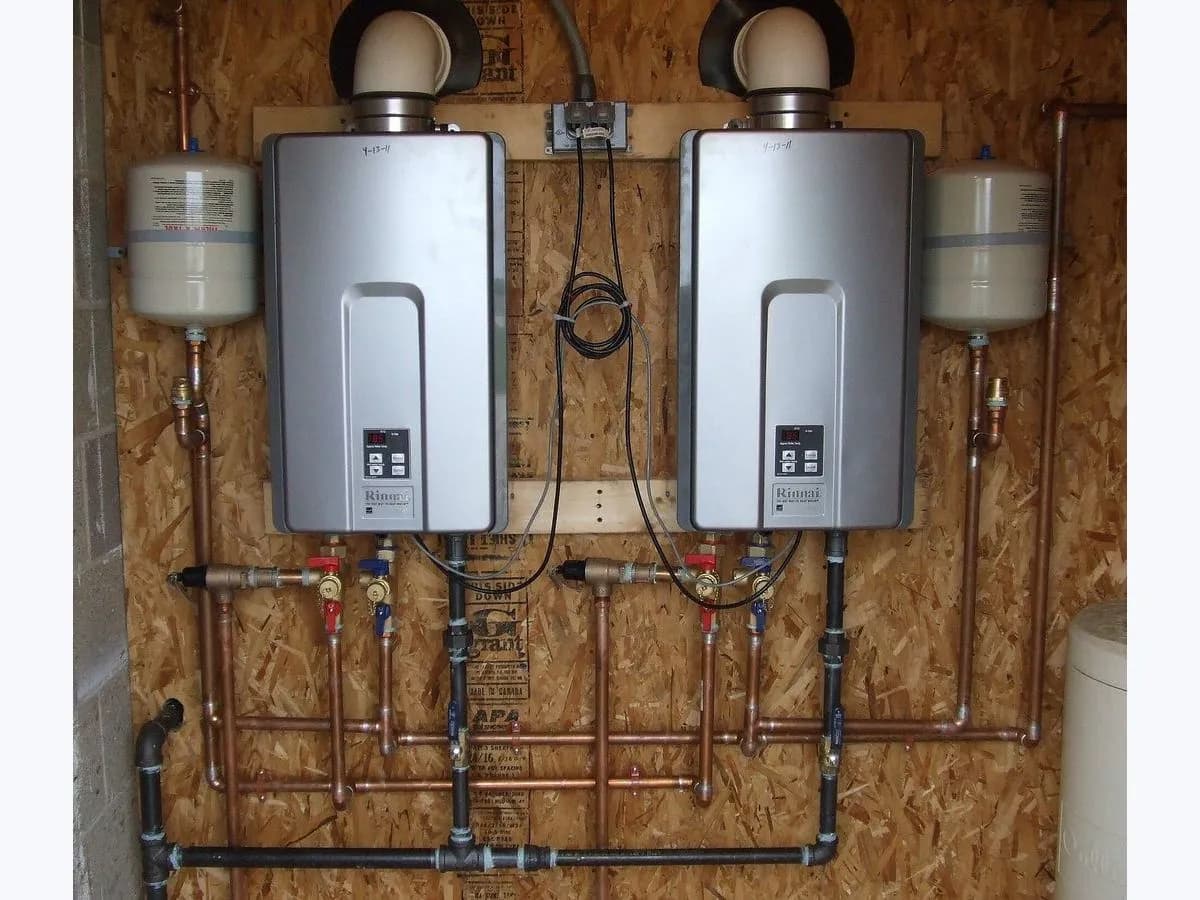
Risk level
Medium
Proceed carefully and stop if the check is unclear.
Urgency
High
Quick answer
The leak sensor detected water at the bottom of the unit. Rinnai's remedy starts with turning off the water supply. Close the isolation valve below the heater, keep it off and have a licensed professional check the internal plumbing.
Safety first
Stop and check this first
- Do not open the cabinet to dry the sensor yourself: inside are gas parts, mains electricity and hot surfaces.
- Rinnai says not to use the appliance if any part has been under water and to have a qualified licensed professional inspect it and replace any control part or gas control that has been under water.
Safe checks you can perform
- Turn off the water supply
- Turn the heater off
- Visible water outside the cabinet
- Recent code history on the controller
Leave these tasks to a qualified professional
- Do not attempt this professional task: Inspect heat exchanger and internal piping
- Do not attempt this professional task: Check leak detector wiring and bottom pan
- Do not attempt this professional task: Test the sensor itself
What a technician must be able to justify
Technician visit
These are the steps they must carry out and show you. Tick them as they work: if steps are skipped, do not accept a part swap.
These are not instructions for opening or handling the equipment yourself. They are the checks that should support a technical conclusion.
Inspect heat exchanger and internal piping
What they doWith water, gas and power off, the professional opens the unit and checks the heat exchanger and all internal piping for leaks.
They must show youphotos of the leak point.
In writingwhat leaked and what was replaced.
Check leak detector wiring and bottom pan
What they doThe professional checks the leak detector harness, dries any water in the pan and on the sensor and restarts the heater.
They must show youthe cabinet after drying and a test run.
In writingwhether water returned.
Test the sensor itself
What they doIf no water is found, Rinnai's procedure fires the heater with the sensor unplugged; if it then operates, the sensor and its screw are replaced.
They must show youthe test with the sensor unplugged.
In writingpart number and reason.
Before accepting a part or repair
Nothing has been shown yet. Do not accept a part swap based on the code alone.
Follow these steps
Note: Follow the documented order. An error code identifies the affected system, but it does not prove by itself which part has failed.
Turn off the water supply
- Who:
- you.
- How:
- close the isolation valve immediately below the heater or turn off the water supply to the building, as Rinnai's manual describes.
- Result that matters:
- stopping any leak.
- If water stops dripping:
- keep the supply off until the visit.
- If water keeps coming from another point:
- close the main supply and call a plumber as well.
- Evidence to keep:
- photo of the closed valve.
Evidence: Rinnai Value Series tankless water heater installation and operation manual
Turn the heater off
- Who:
- you.
- How:
- turn the heater off with the On/Off button and do not use hot water until it is checked.
- Result that matters:
- the heater stays off.
- If water has reached the plug or outlet:
- switch the circuit off at the breaker instead of touching the plug.
- If everything around the plug is dry:
- leave it as it is.
- Evidence to keep:
- time you turned it off.
Do not touch a wet plug or outlet.
Evidence: Rinnai Value Series tankless water heater installation and operation manual
Visible water outside the cabinet
- Who:
- you.
- How:
- look under and around the heater without opening it, including the pipes and the pressure relief valve line.
- Result that matters:
- where water is visible.
- If water drips from the bottom of the cabinet:
- an internal leak is likely; tell the technician.
- If everything is dry:
- a sensor fault or a past event is possible.
- Evidence to keep:
- photos of any water and its location.
Evidence: Rinnai USA troubleshooting tankless water heater diagnostic codes
Recent code history on the controller
- Who:
- you.
- How:
- on the MC-91-2 controller of Value Series models, press and hold On/Off for 2 seconds and, while holding it, press the up button. The last 9 codes flash one after another. Repeat the same keys to exit.
- Result that matters:
- whether 79 repeats and which other codes appear.
- If only 79 repeats:
- the problem is consistent and the technician starts from this code.
- If 79 appears with other codes:
- note every code, because they change the diagnosis.
- Evidence to keep:
- a photo or video of the code sequence with the date.
Evidence: Rinnai Value Series tankless water heater installation and operation manual
Still not solved
If the error persists, stop here. See what the technician must do and show you.
Where this code applies
A code is meaningful only inside the right product and version context.
Primary scope
- System
- Boilers
- Brand
- Rinnai
- Product type
- Tankless gas water heater
Known code variants
- 79
- calentador Rinnai 79
- código 79 Rinnai
- error 79 Rinnai
- Rinnai 79
- Rinnai 79 water leak
- Rinnai code 79
- Rinnai code 79 tankless
- Rinnai error 79
What it means
Rinnai defines code 79 as water leakage detected: the leak detector found water at the bottom of the unit. Its troubleshooting guide lists it for Non-SENSEI models and checks the leak detector wiring, the heat exchanger and internal piping, water pooled in the bottom pan and finally the sensor. Water can come from an internal leak or reach the cabinet without a leak, or the sensor can fail; the code alone does not show which.
Warnings and stop conditions
- Mediumeditorial warning
Do not open the cabinet to dry the sensor yourself: inside are gas parts, mains electricity and hot surfaces.
Evidence: Rinnai USA troubleshooting tankless water heater diagnostic codes
- Highsource verified
Rinnai says not to use the appliance if any part has been under water and to have a qualified licensed professional inspect it and replace any control part or gas control that has been under water.
Evidence: Rinnai Value Series tankless water heater installation and operation manual
Symptoms and causes
Probable causes · in order
- Leak in the heat exchanger or internal pipingPossible
The main branch in Rinnai's guide. Fits if water keeps appearing after the cabinet is dried.
Evidence: Rinnai USA troubleshooting tankless water heater diagnostic codes
- Water in the cabinet without an active leakPossible
Rinnai has the technician dry the pan and sensor and restart. Fits if the code does not return.
Evidence: Rinnai USA troubleshooting tankless water heater diagnostic codes
- Leak sensor or wiring faultPossible
Damaged wiring or a faulty sensor. Rinnai replaces it only if no water is found and the heater runs with the sensor unplugged.
Evidence: Rinnai USA troubleshooting tankless water heater diagnostic codes
Virtual technician
Does 79 still appear after these checks?
Answer a few questions to narrow down the likely cause and the safest next action. Guidance only - it never replaces a professional.
Sources and technical references
- 1
Rinnai USA troubleshooting tankless water heater diagnostic codes
Rinnai America · 2024 · manual
- 2
Rinnai Value Series tankless water heater installation and operation manual
Rinnai America · 2019 · manual
Was this entry useful?