
- HVAC
- Air conditioner
E1
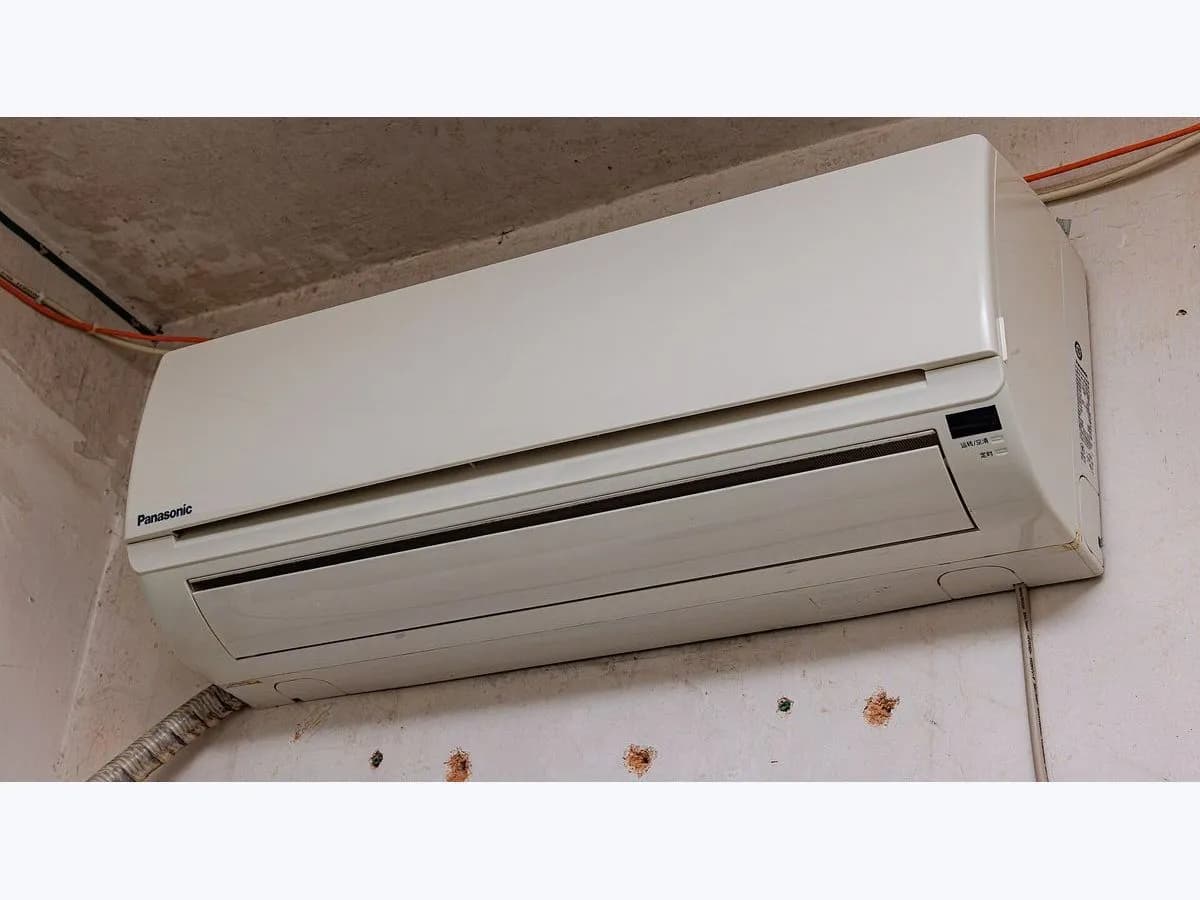
Daitsu E1 on an air conditioner: indoor ambient temperature sensor
Risk level
Medium
Proceed carefully and stop if the check is unclear.
Urgency
Low
Quick answer
On Daitsu Artic Plus wall-mounted splits, E1 means a fault in the indoor ambient temperature sensor. Switch the unit off, write down the code and ask a qualified professional to check it; do not open the unit.
Safety first
Stop and check this first
- Daitsu requires the unit to be serviced by qualified professionals, all power circuits to be disconnected before accessing the terminals, and anyone working on the refrigerant circuit to hold a valid certificate. This unit uses R32.
Safe checks you can perform
- Code on the indoor display
- Symptoms that require cutting the power
- Measuring the ambient sensor
Leave these tasks to a qualified professional
- Do not attempt this professional task: Control test
- Do not attempt this professional task: Measure the sensor before replacing parts
What a technician must be able to justify
Technician visit
These are the steps they must carry out and show you. Tick them as they work: if steps are skipped, do not accept a part swap.
These are not instructions for opening or handling the equipment yourself. They are the checks that should support a technical conclusion.
Control test
What they doAfter the repair the technician checks the unit controls the room temperature without showing E1 again.
They must show youthe unit controlling with no code.
In writingdate and result of the test.
Measure the sensor before replacing parts
What they doThe technician measures the ambient sensor and checks its connector before replacing the sensor or the board.
They must show youthe measured value against the specification.
In writingwhich part was replaced and why.
Before accepting a part or repair
Nothing has been shown yet. Do not accept a part swap based on the code alone.
Follow these steps
Note: Follow the documented order. An error code identifies the affected system, but it does not prove by itself which part has failed.
Code on the indoor display
- Who:
- you.
- How:
- look at the indoor unit display: Daitsu shows the fault code there.
- Result that matters:
- that the code is E1 and not E2 or E3, which Daitsu assigns to the indoor and outdoor pipe sensors.
- If it is E1:
- the indoor ambient sensor is the suspect.
- If it is E2 or E3:
- it is a pipe sensor; this page does not apply.
- Evidence to keep:
- a photo of the display with the code, date and time.
Evidence: Daitsu Artic Plus DS-9KTP-6, DS-12KTP-6, DS-18KTP-6, DS-24KTP-6: manual de instalación y usuario
Symptoms that require cutting the power
- Who:
- you.
- How:
- check, without opening the unit, for strange noises, overheated cables or plugs or very strong smells. Daitsu says to switch off at once and cut the power in those cases.
- Result that matters:
- whether any of those symptoms appear besides the code.
- If there is one:
- switch off, cut the power at the consumer unit and report the symptom to the technician.
- If there is none:
- switch off with the remote and ask for a check with the code noted.
- Evidence to keep:
- a note of the symptom seen or that there was none.
Evidence: Daitsu Artic Plus DS-9KTP-6, DS-12KTP-6, DS-18KTP-6, DS-24KTP-6: manual de instalación y usuario
Measuring the ambient sensor
- Who:
- an air conditioning technician.
- How:
- with the power circuits disconnected, checks the ambient sensor connector and measures it against the manufacturer's specification.
- Result that matters:
- whether the sensor is out of specification or measures correctly.
- If it is out of specification:
- the sensor is confirmed as the cause.
- If it measures correctly:
- the cause is in the connection or the board.
- Evidence to keep:
- a job sheet with the measured value against the specification.
Requires opening the indoor unit with the power disconnected: technician only.
Evidence: Daitsu Artic Plus DS-9KTP-6, DS-12KTP-6, DS-18KTP-6, DS-24KTP-6: manual de instalación y usuario
Still not solved
If the error persists, stop here. See what the technician must do and show you.
Where this code applies
A code is meaningful only inside the right product and version context.
Primary scope
- System
- HVAC
- Brand
- Daitsu
- Product type
- Air conditioner
Known code variants
- aire acondicionado Daikin E1
- climatisation Daikin E1
- climatizzatore Daikin E1
- code erreur E1 Daikin
- codice E1 Daikin
- código E1 Daikin
- Cointra E1
- Daikin AC E1
- Daikin E1
- Daikin error E1
- Daikin Fehler E1
- Daikin Fehlercode E1
- Daitsu E1
- DDSX225 E1
- De'Longhi dehumidifier E1 probe
- De'Longhi E1
- DeLonghi Tasciugo E1
- deshumidificador De'Longhi E1 sonda
- deshumidificador Meaco E1
- DEXD216F E1
- E01
- E 1
- Er1
- error E1 Daikin
- error E1 frigorífico Hotpoint
- error E1 lavavajillas Fagor
- error E1 lavavajillas LG
- errore E1 Daikin
- Fagor 3LVF-623.1 E1
- Fagor dishwasher E1
- Fagor dishwasher error E1
- Fagor dishwasher not filling E1
- Fagor lavavajillas E1
- frigorífico combi Hotpoint E1 sensor
- Gree E1
- Haier E1
- Hotpoint E1 error fridge freezer
- Hotpoint E1 frigorífico
- Hotpoint fridge freezer E1
- Hotpoint fridge freezer E1 sensor fault
- Klimaanlage Daikin E1
- lavavajillas Fagor no coge agua E1
- lavavajillas LG aquastop E1
- lavavajillas LG fuga E1
- lavavajillas LG no coge agua E1
- LG dishwasher aquastop E1
- LG dishwasher E1
- LG dishwasher error E1
- LG dishwasher float switch E1
- LG dishwasher leak E1
- LG lavavajillas E1
- Meaco 12L E1
- Meaco dehumidifier E1
- Meaco E1
- MeacoDry Arete E1
- panne E1 Daikin
- TND 100 E1
- TND 150 E1
- TND 50 E1
- TND 80 E1
- TND E1
What it means
Daitsu defines E1 as a fault in the indoor ambient temperature sensor, the one the control uses to know the room temperature. The Artic Plus table gives no causes or steps. The code does not prove the sensor is broken: its connection or the board can also give an invalid reading, and only the professional's measurement separates them.
Warnings and stop conditions
- Highsource verified
Daitsu requires the unit to be serviced by qualified professionals, all power circuits to be disconnected before accessing the terminals, and anyone working on the refrigerant circuit to hold a valid certificate. This unit uses R32.
Evidence: Daitsu Artic Plus DS-9KTP-6, DS-12KTP-6, DS-18KTP-6, DS-24KTP-6: manual de instalación y usuario
Symptoms and causes
Probable causes · in order
- Indoor ambient sensorPossible
The component Daitsu names for E1. It is confirmed by measuring it against the manufacturer's specification with the power isolated.
Evidence: Daitsu Artic Plus DS-9KTP-6, DS-12KTP-6, DS-18KTP-6, DS-24KTP-6: manual de instalación y usuario
- Sensor connection or boardPossible
If the sensor measures correctly, the reading fails in its connection or the control. Replacing the sensor without measuring it is not justified.
Evidence: Daitsu Artic Plus DS-9KTP-6, DS-12KTP-6, DS-18KTP-6, DS-24KTP-6: manual de instalación y usuario
Virtual technician
Does E1 still appear after these checks?
Answer a few questions to narrow down the likely cause and the safest next action. Guidance only - it never replaces a professional.
Sources and technical references
Was this entry useful?