
- HVAC
- Air conditioner
18
Toshiba 18 on an air conditioner: outdoor TE or TS sensor error
Risk level
Medium
Proceed carefully and stop if the check is unclear.
Urgency
Medium
Quick answer
On Toshiba RAS-M05G3KVSG series splits, code 18 means an abnormal reading from the TE (outdoor heat exchanger) or TS (suction pipe) sensor and the unit stops completely. Do one reset from the breaker and, if it returns, call a technician.
Safety first
Stop and check this first
- Do not open the outdoor unit: the TE and TS sensors and the inverter board are inside, next to live components. Always turn off the breaker before any outdoor cleaning.
- The unit uses R32, a flammable refrigerant: any work on the 4-way valve or the circuit is only for an F-gas certified technician.
Safe checks you can perform
- Indoor unit lamps
- One reset from the breaker
- TE and TS sensors and their connections
- 4-way valve operation
Leave these tasks to a qualified professional
- Do not attempt this professional task: 4-way valve test
- Do not attempt this professional task: Code clearing after the repair
- Do not attempt this professional task: TE and TS sensor measurement
What a technician must be able to justify
Technician visit
These are the steps they must carry out and show you. Tick them as they work: if steps are skipped, do not accept a part swap.
These are not instructions for opening or handling the equipment yourself. They are the checks that should support a technical conclusion.
4-way valve test
What they doThey check that the valve switches between cooling and heating before accepting a sensor replacement as the fix.
They must show youTE and TS temperatures in each mode and the valve switching.
In writingtest result and, if the circuit was opened, leak test result and kg of R32 recovered or charged.
Code clearing after the repair
What they doWhen finished, the technician clears the stored code by sending 7F from the remote in service mode, as Toshiba describes.
They must show youthe remote in service mode without code 18 after the test.
In writingrepair date, operating test and code clearing.
TE and TS sensor measurement
What they doThe technician measures both sensors, checks each is on its own connector and checks the inverter board if they are fine.
They must show youthe TE and TS readings compared with the outdoor unit documentation values and the position of each connector.
In writingcode 18, measured values and the sensor replaced or connection corrected with the reason.
Before accepting a part or repair
Nothing has been shown yet. Do not accept a part swap based on the code alone.
Follow these steps
Note: Follow the documented order. An error code identifies the affected system, but it does not prove by itself which part has failed.
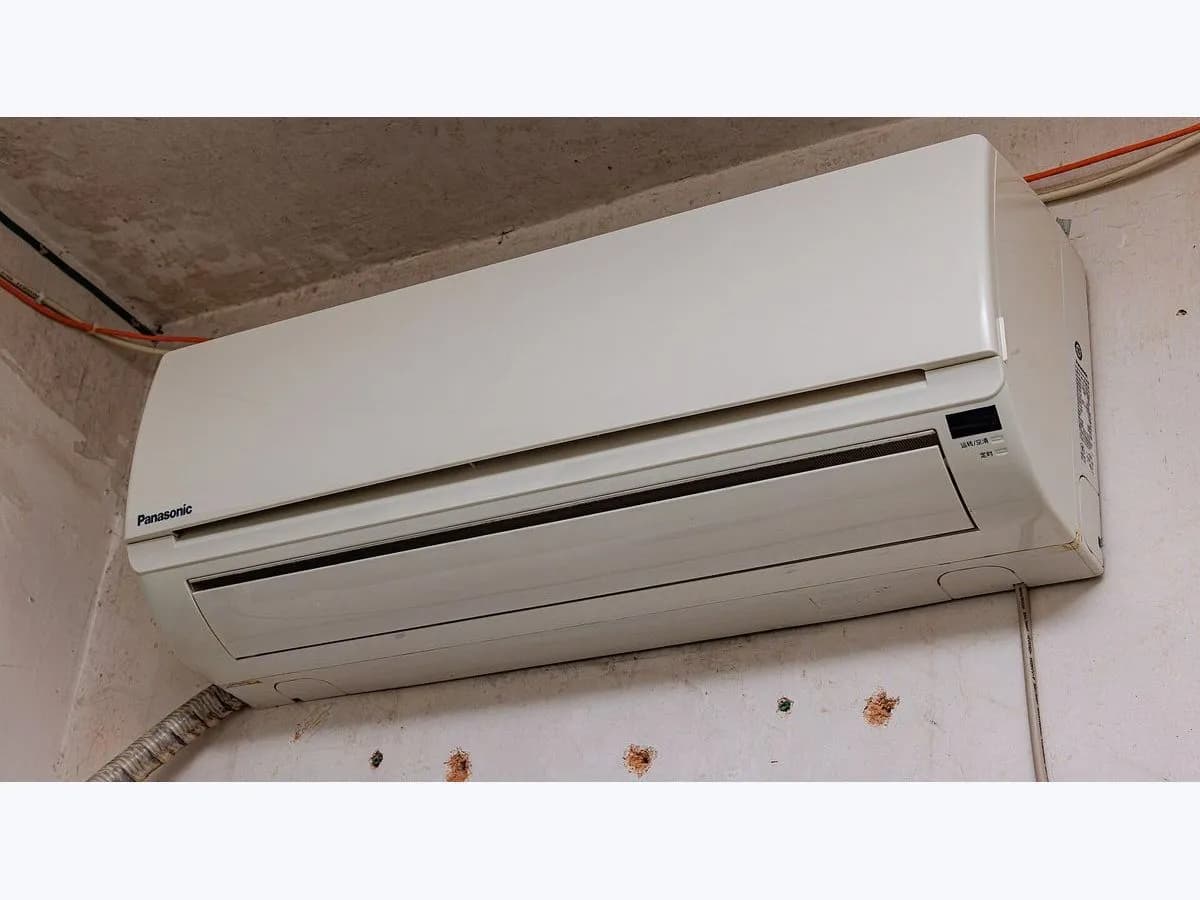
Indoor unit lamps
- Who:
- you, looking at the indoor unit.
- How:
- per Toshiba's table, faults in the outdoor board block show as the OPERATION lamp flashing fast (5 Hz). With code 18 the unit switches off entirely. The exact code is read with the remote in service mode (CHECK button on the back), a service manual procedure.
- Result that matters:
- knowing the fault comes from the outdoor block and having the code for the technician.
- If you see that flashing and the unit has stopped:
- note the time and the mode in use.
- If the lamps show another pattern:
- the fault may be in another block; tell the technician.
- Evidence to keep:
- a short video of the lamps, the mode in use and the rough outdoor temperature.
Evidence: Toshiba service manual SVM-22103, R32 wall-mounted indoor units RAS-M05G3KVSG-E and RAS-M05G3KVSGB-E
One reset from the breaker
- Who:
- you, at the consumer unit or the unit's isolator.
- How:
- switch off with the remote, turn off the breaker and turn it back on. Toshiba says turning the power off and on returns the unit to normal operation, although the code stays stored in memory until the technician clears it.
- Result that matters:
- whether the code comes back once the unit is running again.
- If 18 does not return:
- note it; the error count only clears if the unit runs more than 6 minutes without repeating it.
- If 18 returns:
- do not insist and call a technician; the code will stay in memory for the diagnosis.
- Evidence to keep:
- the date, time, mode in use and whether the code returned and after how long.
Evidence: Toshiba service manual SVM-22103, R32 wall-mounted indoor units RAS-M05G3KVSG-E and RAS-M05G3KVSGB-E
TE and TS sensors and their connections
- Who:
- a qualified air conditioning technician.
- How:
- opens the outdoor unit with the power isolated, checks that TE and TS are in place and each plugged into its own connector, tests each sensor with a multimeter and, if all is fine, checks the inverter board. TE and TS values are not in this indoor unit manual: they come from the outdoor unit service documentation.
- Result that matters:
- whether the fault is a sensor, a crossed connection or the board.
- If a sensor is loose, crossed or out of range:
- the connection is corrected or the sensor replaced.
- If sensors and connections are fine:
- the 4-way valve and inverter board are checked.
- Evidence to keep:
- measured resistance values and the condition of each connector.
Requires opening the outdoor unit and working next to the inverter board: technician only, with the power isolated.
Evidence: Toshiba service manual SVM-22103, R32 wall-mounted indoor units RAS-M05G3KVSG-E and RAS-M05G3KVSGB-E
4-way valve operation
- Who:
- an F-gas certified air conditioning technician.
- How:
- checks that the 4-way valve operates and sits in the correct position in cooling and heating, and compares TE and TS temperatures with normal operation, as Toshiba asks.
- Result that matters:
- ruling out the valve, rather than the sensors, as the source of the code.
- If the valve does not switch or stays halfway:
- the valve or its coil is repaired.
- If the valve works:
- the source is the sensors or the board.
- Evidence to keep:
- temperatures read in cooling and heating and the valve test result.
R32 circuit, a flammable refrigerant: any work on the valve requires a certified technician and R32 tools.
Evidence: Toshiba service manual SVM-22103, R32 wall-mounted indoor units RAS-M05G3KVSG-E and RAS-M05G3KVSGB-E
Still not solved
If the error persists, stop here. See what the technician must do and show you.
Where this code applies
A code is meaningful only inside the right product and version context.
Primary scope
- System
- HVAC
- Brand
- Toshiba
- Product type
- Air conditioner
Known code variants
- código 18 Toshiba
- Toshiba 18
- Toshiba check code 18
- Toshiba error 18
What it means
In service manual SVM-22103 for the R32 RAS-M05G3KVSG-E indoor units, Toshiba links code 18 (outdoor board block) to a TE or TS sensor that is out of place, disconnected, shorted or plugged into the other sensor's connector. Everything switches off and the code is recorded after 4 detections. It can also appear if the 4-way valve makes TE and TS read differently from normal operation. Other models may differ. The code alone never proves that a specific part is faulty.
Warnings and stop conditions
- Higheditorial warning
Do not open the outdoor unit: the TE and TS sensors and the inverter board are inside, next to live components. Always turn off the breaker before any outdoor cleaning.
Evidence: Toshiba service manual SVM-22103, R32 wall-mounted indoor units RAS-M05G3KVSG-E and RAS-M05G3KVSGB-E
- Highsource verified
The unit uses R32, a flammable refrigerant: any work on the 4-way valve or the circuit is only for an F-gas certified technician.
Evidence: Toshiba service manual SVM-22103, R32 wall-mounted indoor units RAS-M05G3KVSG-E and RAS-M05G3KVSGB-E
Symptoms and causes
Probable causes · in order
- TE or TS sensor disconnected or shortedCommon
Toshiba lists sensors out of place, disconnected or short-circuited as causes of code 18, and says to check sensors and connections first.
Evidence: Toshiba service manual SVM-22103, R32 wall-mounted indoor units RAS-M05G3KVSG-E and RAS-M05G3KVSGB-E
- Sensors swapped on their connectorsPossible
The manual explicitly mentions the TE sensor connected to the TS connector and the TS sensor connected to the TE connector.
Evidence: Toshiba service manual SVM-22103, R32 wall-mounted indoor units RAS-M05G3KVSG-E and RAS-M05G3KVSGB-E
- 4-way valvePossible
If the 4-way valve does not operate or is out of position, the relationship between TE and TS temperatures changes and code 18 may appear.
Evidence: Toshiba service manual SVM-22103, R32 wall-mounted indoor units RAS-M05G3KVSG-E and RAS-M05G3KVSGB-E
- Outdoor inverter boardPossible
If sensors and connections are fine, Toshiba says to check the outdoor unit's inverter board.
Evidence: Toshiba service manual SVM-22103, R32 wall-mounted indoor units RAS-M05G3KVSG-E and RAS-M05G3KVSGB-E
Virtual technician
Does 18 still appear after these checks?
Answer a few questions to narrow down the likely cause and the safest next action. Guidance only - it never replaces a professional.
Sources and technical references
Was this entry useful?