
- Appliances
- Water softeners
CHECK SALT
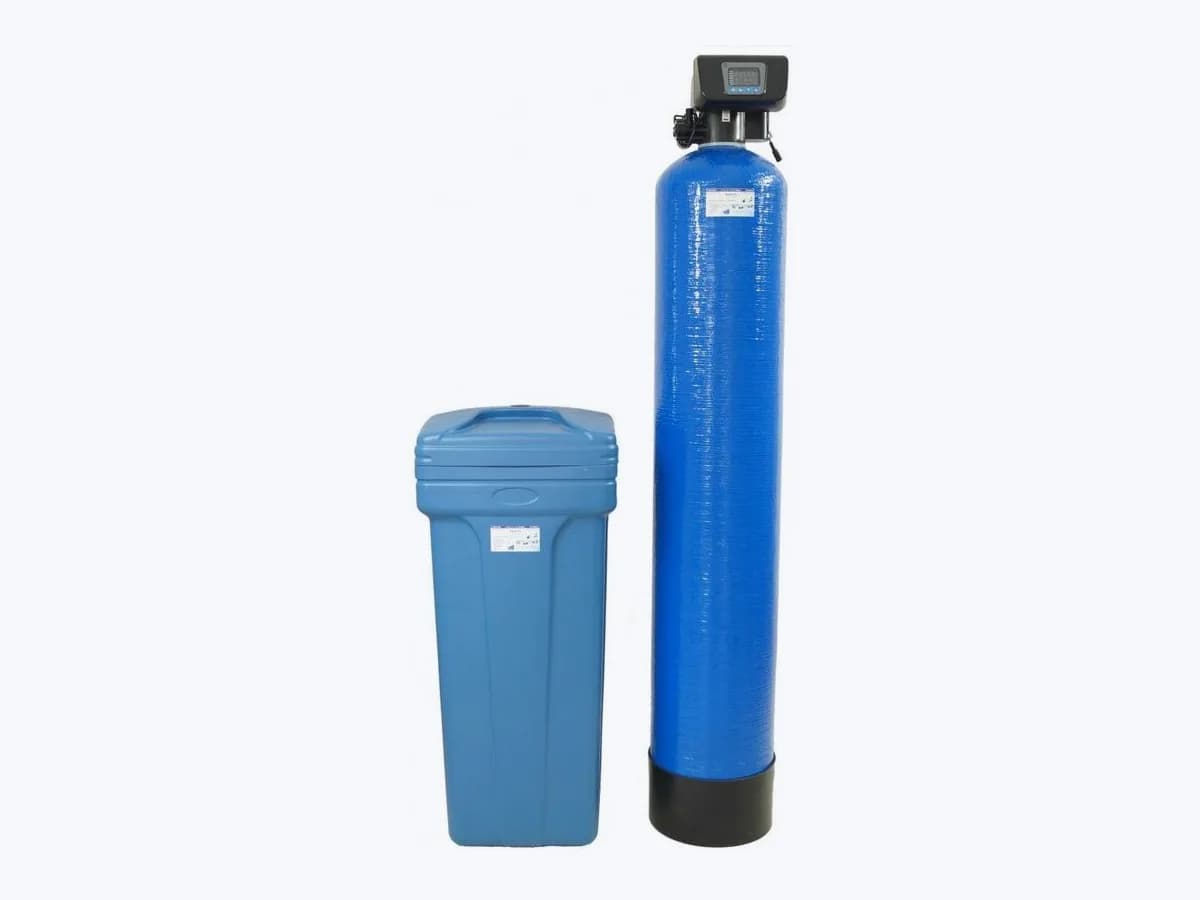
Culligan CHECK SALT on water softener: no brine in cycle
Risk level
Low
Usually safe to check without specialist tools.
Urgency
Medium
Quick answer
CHECK SALT (on Gold Series) or Check Brine Tank (on High Efficiency units) means the Aqua-Sensor probe detected no brine during the regeneration rinse cycle. Check the salt level, probe for a salt bridge with a broom handle marked at 34 inches, wait 4 hours after refilling and run a regeneration.
Safety first
Stop and check this first
- Never force a probing tool past the 34-inch mark when breaking a salt bridge, because the horizontal salt plate at the bottom of the storage tank can be cracked.
- If sanitizing the conditioner with 1/3 to 1/2 cup of household bleach (5.25% sodium hypochlorite), never use bleach alongside iron-control chemicals or iron-control salt, as toxic fumes can form.
Safe checks you can perform
- Check the salt supply and wait 4 hours after refilling
- Probe for salt bridging with a broom handle marked at 34 inches
- Run a complete manual regeneration to clear CHECK SALT
Leave these tasks to a qualified professional
- Do not attempt this professional task: Aqua-Sensor 2.5 VAC signal and brine draw inspection
- Do not attempt this professional task: Eductor nozzle cleaning or Aqua-Sensor probe replacement
What a technician must be able to justify
Technician visit
These are the steps they must carry out and show you. Tick them as they work: if steps are skipped, do not accept a part swap.
These are not instructions for opening or handling the equipment yourself. They are the checks that should support a technical conclusion.
Aqua-Sensor 2.5 VAC signal and brine draw inspection
What they doThe Culligan technician checks brine draw during cycle 2, inspects the brine line connections and tests the 2.5 VAC power supply and signal from the Aqua-Sensor probe at the circuit board.
They must show youthe controller detecting the brine signal during rinse and returning to normal Aqua-Sensor operation.
In writingthe brine draw measurement and the test result for the 2.5 VAC Aqua-Sensor probe circuit.
Eductor nozzle cleaning or Aqua-Sensor probe replacement
What they doIf the brine eductor nozzle and throat are plugged or the probe has failed, the dealer cleans the eductor assembly or replaces the Aqua-Sensor probe (covered for 5 years under the Gold and HE limited warranties).
They must show youthe cleaned eductor or replacement probe and a cleared error screen after a test cycle.
In writingthe parts serviced or replaced and whether the 5-year Aqua-Sensor probe warranty applied.
Before accepting a part or repair
Nothing has been shown yet. Do not accept a part swap based on the code alone.
Follow these steps
Note: Follow the documented order. An error code identifies the affected system, but it does not prove by itself which part has failed.
Check the salt supply and wait 4 hours after refilling
- Who:
- you, at the salt storage tank.
- How:
- lift the salt tank cover and check the salt level. If it is low, refill the tank to within a few inches of the top and wait approximately 4 hours for the salt to dissolve before starting a recharge cycle.
- Result that matters:
- giving fresh salt enough time to dissolve into a saturated brine solution.
- If the tank was low on salt:
- after the 4-hour wait, start a manual regeneration.
- If plenty of salt is visible in the tank:
- probe for a hidden salt bridge underneath.
- Evidence to keep:
- how much salt was in the tank and the time you refilled it.
Evidence: Culligan Gold Series Water Conditioner Owner's Guide (P/N 01018854B) · Culligan Medallist Series Automatic Water Softener Owner's Guide (01020482 Rev F)
Probe for salt bridging with a broom handle marked at 34 inches
- Who:
- you, using a broom handle or blunt tool.
- How:
- make a pencil or tape mark 34 inches from the end of a broom handle and carefully probe down through the salt. If you hit a hard obstruction before the 34-inch mark reaches the rim of the salt tank, continue probing gently to break the bridge completely without pushing past the mark.
- Result that matters:
- collapsing the hollow salt crust into the water without damaging the horizontal salt plate.
- If you find and break a hollow crust:
- wait about 4 hours for brine to form, then run a manual recharge.
- If no bridge is present and the tank has not been cleaned in 2 years:
- consider a periodic tank clean-out or dealer check.
- Evidence to keep:
- whether an obstruction was felt above the 34-inch mark.
Do not force the broom handle past the 34-inch mark, as the manual warns this can damage the horizontal salt plate at the bottom of the tank.
Evidence: Culligan Gold Series Water Conditioner Owner's Guide (P/N 01018854B) · Culligan Medallist Series Automatic Water Softener Owner's Guide (01020482 Rev F)
Run a complete manual regeneration to clear CHECK SALT
- Who:
- you, at the softener keypad.
- How:
- once brine is ready in the tank, initiate an immediate regeneration (hold the regeneration button for 10 seconds on HE units for REGEN NOW, or 5 seconds on Medallist) and allow the conditioner to finish the entire recharge cycle.
- Result that matters:
- letting the Aqua-Sensor detect brine during the brine rinse stage so the controller clears the alert.
- If CHECK SALT or Check Brine Tank clears after regeneration:
- Aqua-Sensor demand mode is restored.
- If the alert remains after a full regeneration cycle:
- contact your local Culligan dealer.
- Evidence to keep:
- start and finish times of the regeneration and the display status afterward.
Evidence: Culligan Gold Series Water Conditioner Owner's Guide (P/N 01018854B) · Culligan Medallist Series Automatic Water Softener Owner's Guide (01020482 Rev F) · Culligan High Efficiency Automatic Water Softener Owner's Guide (01021076 Rev H)
Still not solved
If the error persists, stop here. See what the technician must do and show you.
Where this code applies
A code is meaningful only inside the right product and version context.
Primary scope
- System
- Appliances
- Brand
- Culligan
- Product type
- Water softeners
Known code variants
- Aqua Sens Probe
- Check Brine Tank
- CHECK SALT
- comprobar sal Culligan
- Culligan Check Brine Tank
- Culligan CHECK SALT
- Culligan no brine detected
- Low Salt Level
- Salt Bridging
What it means
In the Culligan Gold Series Owner's Guide (P/N 01018854B), CHECK SALT triggers in Aqua-Sensor (A/S) mode when the control fails to receive the distinct probe signal during the brine rinse cycle; once triggered, the Aqua-Sensor is no longer a valid regeneration trigger and the alert clears only after a successful regeneration of the resin bed. In the High Efficiency 1.25 Owner's Guide (01024584 Rev E), the matching alert is Check Brine Tank, alongside Salt Bridging or Low Salt Level (fewer than 15 days of salt left). Other models may differ, and the message alone never proves the sensor is defective.
Warnings and stop conditions
- Mediumsource verified
Never force a probing tool past the 34-inch mark when breaking a salt bridge, because the horizontal salt plate at the bottom of the storage tank can be cracked.
Evidence: Culligan Gold Series Water Conditioner Owner's Guide (P/N 01018854B) · Culligan Medallist Series Automatic Water Softener Owner's Guide (01020482 Rev F)
- Lowsource verified
If sanitizing the conditioner with 1/3 to 1/2 cup of household bleach (5.25% sodium hypochlorite), never use bleach alongside iron-control chemicals or iron-control salt, as toxic fumes can form.
Evidence: Culligan Gold Series Water Conditioner Owner's Guide (P/N 01018854B) · Culligan High Efficiency Automatic Water Softener Owner's Guide (01021076 Rev H)
Symptoms and causes
Probable causes · in order
- Empty salt tank or fewer than 15 days of salt remainingCommon
When salt runs out or drops below 15 days of supply (shown as Low Salt Level on High Efficiency units), the tank cannot form enough brine for the rinse cycle.
Evidence: Culligan Gold Series Water Conditioner Owner's Guide (P/N 01018854B) · Culligan High Efficiency 1.25 Water Softener Owner's Guide (01024584 Rev E)
- Salt bridge forming a hollow crust above the waterCommon
Culligan's guides explain that high humidity or certain purified salts can form a hard crust with an empty space underneath, keeping salt from dissolving into brine.
Evidence: Culligan Gold Series Water Conditioner Owner's Guide (P/N 01018854B) · Culligan Medallist Series Automatic Water Softener Owner's Guide (01020482 Rev F) · Culligan High Efficiency 1.25 Water Softener Owner's Guide (01024584 Rev E)
- Loose brine line fitting or interrupted brine drawPossible
If the brine tubing is not seated fully in the push fitting or the valve fails to draw brine from the storage tank, no brine reaches the resin bed during regeneration.
Evidence: Culligan High Efficiency 1.25 Water Softener Owner's Guide (01024584 Rev E) · Culligan High Efficiency Automatic Water Softener Owner's Guide (01021076 Rev H)
- Disconnected Aqua-Sensor probe or missing 2.5 VAC supplyLess common
On High Efficiency 1.25 units, the related Aqua Sens Probe error indicates that an installed Aqua-Sensor is not detected by the main board or lacks its 2.5 V power supply.
Evidence: Culligan Gold Series Water Conditioner Owner's Guide (P/N 01018854B) · Culligan High Efficiency 1.25 Water Softener Owner's Guide (01024584 Rev E)
Virtual technician
Does CHECK SALT still appear after these checks?
Answer a few questions to narrow down the likely cause and the safest next action. Guidance only - it never replaces a professional.
Sources and technical references
- 1
Culligan Gold Series Water Conditioner Owner's Guide (P/N 01018854B)
Culligan · 2007 · official_doc
- 2
Culligan Medallist Series Automatic Water Softener Owner's Guide (01020482 Rev F)
Culligan · 2020 · official_doc
- 3
Culligan High Efficiency 1.25 Water Softener Owner's Guide (01024584 Rev E)
Culligan · 2019 · official_doc
- 4
Culligan High Efficiency Automatic Water Softener Owner's Guide (01021076 Rev H)
Culligan · 2019 · official_doc
- 5
Descalcificadores de agua para hogares - Servicio Culligan
Culligan España · 2026 · official_doc
Was this entry useful?